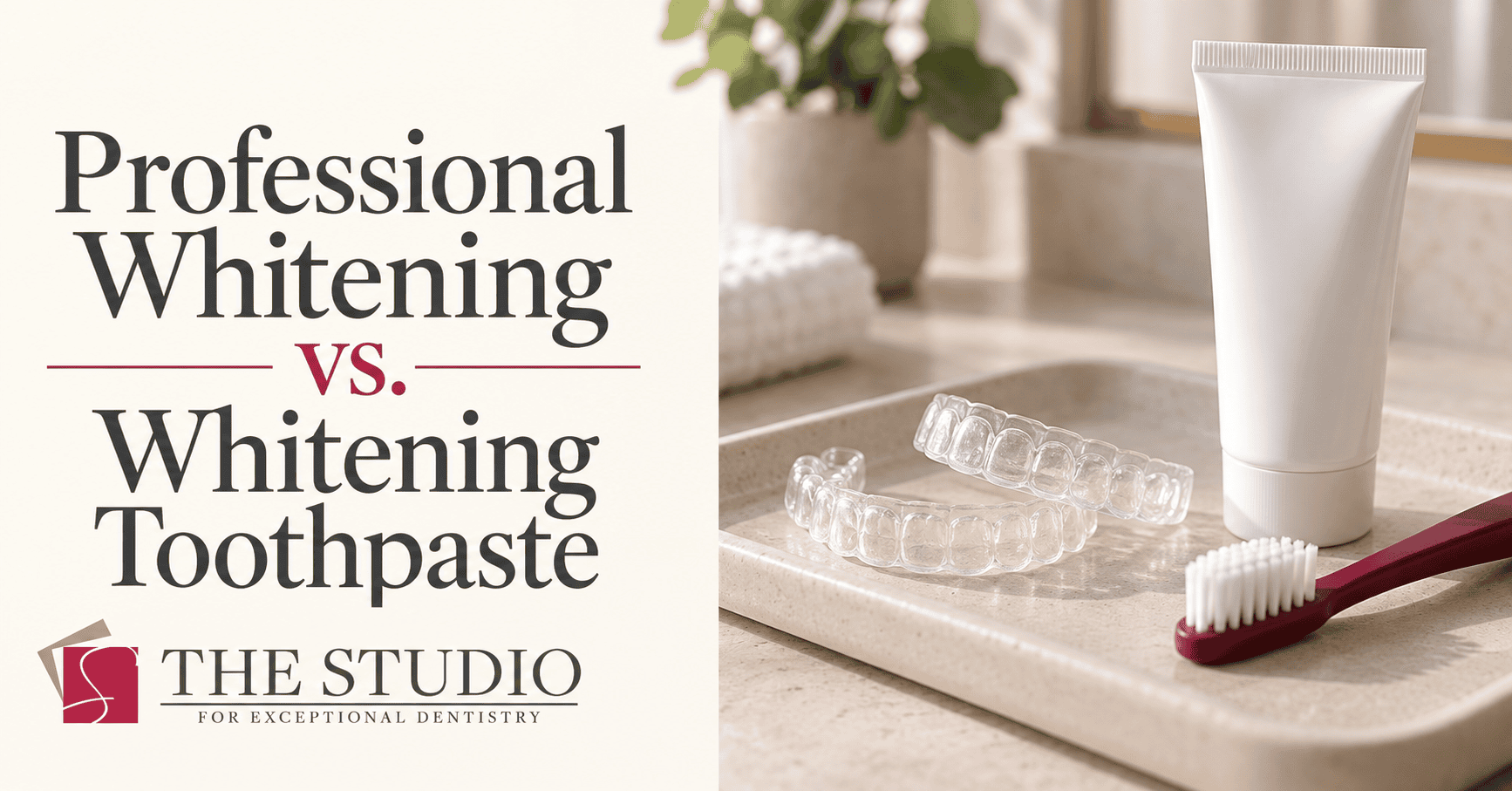

Whitening toothpaste and professional whitening both aim for a brighter smile, but they work in different ways. Toothpaste mainly removes surface stains. Bleaching products can change the color of natural tooth structure. Knowing the difference helps you choose a realistic and safe approach.
Before whitening, a dental exam can identify cavities, gum irritation, cracks, or restorations that may affect comfort and results.
What Whitening Toothpaste Can Do
Whitening toothpaste uses mild abrasives or polishing agents to lift stain from the enamel surface. It may help with discoloration from coffee, tea, tobacco, or strongly colored foods. It does not bleach the internal color of a tooth.
Choose a fluoride toothpaste with the ADA Seal of Acceptance. Scrubbing harder will not whiten teeth faster and can irritate gums or contribute to wear.
How Professional Whitening Is Different
Professional systems use peroxide-based whitening agents. Depending on the plan, treatment may occur in the office or with custom trays used at home under dental guidance. The goal is to break up color within natural tooth structure, not simply polish the surface.
The American Dental Association’s whitening guide notes that results vary with the cause and color of the stain. Review the options offered by The Studio on our teeth whitening page.
Whitening Does Not Change Every Material
Bleaching does not lighten crowns, veneers, bridges, or fillings. If a visible restoration matches your current shade, it may look darker after nearby natural teeth are whitened. Your dentist can help plan the order of treatment when both whitening and new restorations are being considered.
Some tooth colors respond better than others. Yellow tones often respond more readily than gray or brown tones. Discoloration from trauma, medicine, decay, or an old filling may need a different solution.
What About Sensitivity?
Temporary sensitivity can occur when peroxide reaches dentin and irritates the nerve response. Gum irritation may happen if the product contacts soft tissue. A dentist can adjust concentration, timing, or frequency and may suggest desensitizing products.
Do not whiten a painful tooth to cover a color change. A single dark tooth after injury may need diagnostic testing. Visit our cosmetic dentistry page to see how whitening fits with other options.
Choosing the Right Starting Point
Whitening toothpaste may suit mild surface stains and ongoing maintenance. Professional whitening may be better when you want a larger shade change or guidance based on existing dental work. Neither approach creates one guaranteed shade for every patient.
Avoid mixing products or wearing them longer than directed. Overuse can increase sensitivity and irritate gums without creating a better result.
Build a Plan Around Your Smile
The best option depends on stain type, oral health, restorations, sensitivity, and your goal. Contact The Studio for Exceptional Dentistry for a whitening consultation in Colorado Springs.
Frequently Asked Questions
Does whitening toothpaste bleach teeth?
Most whitening toothpastes remove surface stains but do not change the tooth’s underlying color.
Will professional whitening change crowns or fillings?
No. Dental materials do not bleach like natural teeth.
How long do whitening results last?
Timing varies with diet, tobacco use, hygiene, and the starting shade. Touch-up needs are individual.
Is teeth whitening safe for sensitive teeth?
It may be possible with a modified plan, but active pain should be evaluated first. A dentist can help reduce avoidable irritation.