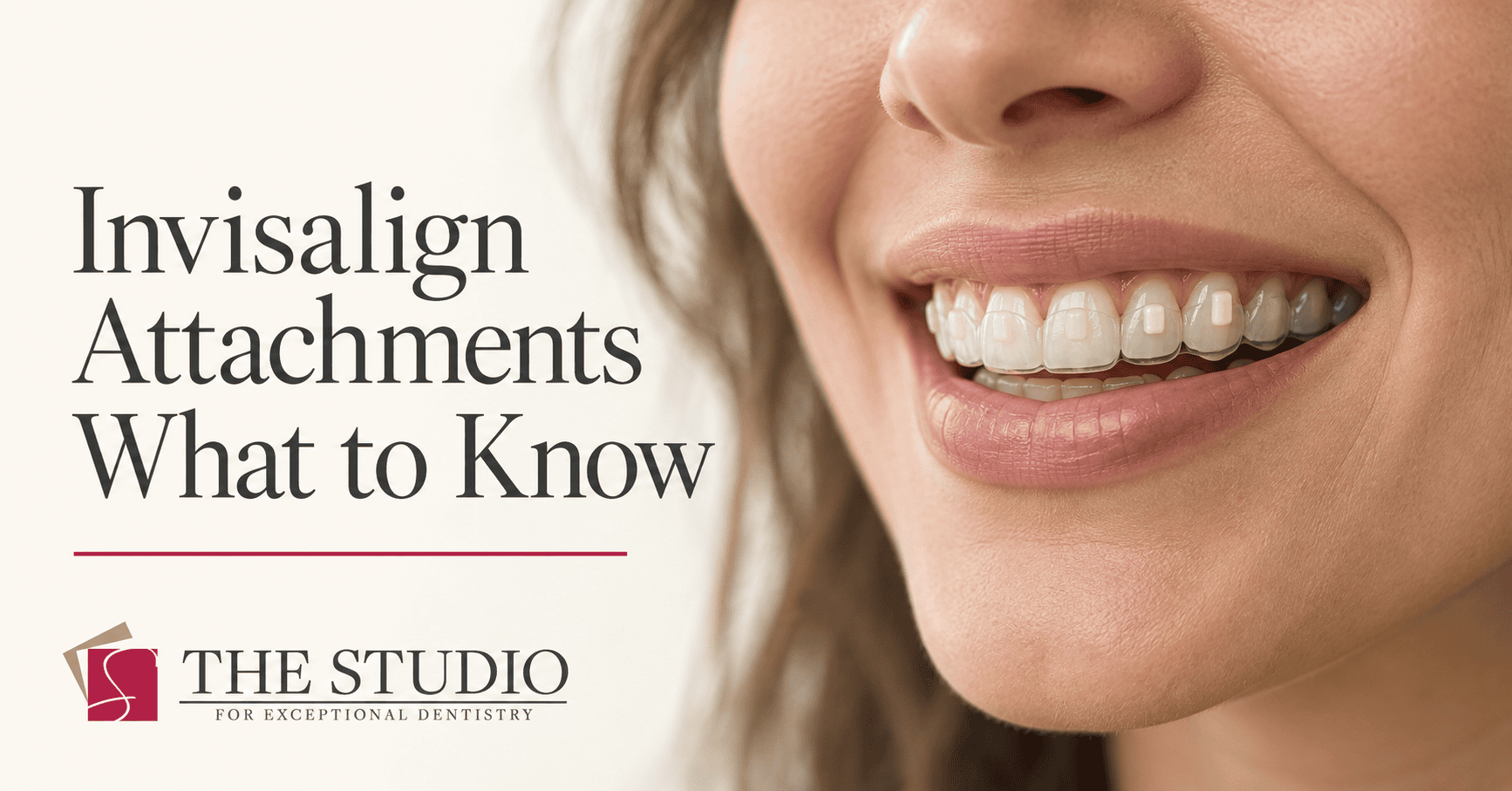

Clear aligners look simple, but many treatment plans use small tooth-colored shapes called attachments. These bonded pieces help an aligner grip a tooth and apply a more precise force. They can support movements that a smooth tray may not control as well on its own.
If attachments are included in your Invisalign plan, knowing what to expect makes the first few days easier.
What Are Invisalign Attachments?
Attachments are small amounts of tooth-colored composite resin bonded to selected teeth. Their shape and position are planned for the movement needed. They are not brackets, and no wire connects them.
When the aligner fits over an attachment, the tray can push or guide the tooth in a planned direction. Not every patient needs the same number. Some may need only a few, while others need attachments on several teeth.
The American Association of Orthodontists explains that clear aligners move teeth through a planned series of trays and need professional diagnosis and monitoring.
What Placement Feels Like
The tooth surface is cleaned and prepared, then the composite is placed with a guide and hardened with a curing light. The process generally does not require numbing because the attachment is bonded to enamel rather than placed inside the tooth.
At first, the shapes can feel rough when your trays are out. Your cheeks and lips usually adapt. The aligners may also feel tighter because the attachments increase their grip.
Learn more about treatment planning on our Invisalign page and see how it fits within cosmetic dentistry.
Removing and Reinserting Aligners
Start at the back and loosen the tray carefully, then work forward. Do not pull hard from one side or use sharp objects. Ask the dental team to demonstrate the technique, especially if several attachments make removal feel difficult.
Seat the tray fully when you put it back. A visible gap between the aligner and a tooth may mean the tray is not seated or the tooth is not tracking as expected. Contact the office instead of forcing a damaged tray.
Cleaning Around Attachments
Remove aligners for meals and for drinks other than plain water, unless your dentist gives different instructions. Brush before reinserting them when possible. Food and plaque can collect around the edges of attachments, so use gentle, careful strokes.
Clean the trays with the recommended method and cool or lukewarm water. Hot water can distort plastic. Do not use attachments as a reason to scrub harder, since heavy pressure can irritate gums.
If an Attachment Comes Off
A missing attachment may feel like a smooth spot, or you may notice that an aligner fits differently. Keep wearing the aligner unless the office tells you otherwise, and call for instructions. It may not require a same-day visit, but the timing depends on the planned tooth movement.
Do not attempt to glue it back. The tooth must be prepared and the attachment shaped correctly.
Life With Attachments
Attachments may be visible at close range, especially on front teeth, but they are designed to blend with enamel. Coffee, tea, tobacco, and deeply colored foods may stain plaque or resin. Good cleaning and routine monitoring help keep the area healthy.
When treatment is complete, the attachments are removed, and the enamel is polished. Retainer wear then helps protect the result.
Start With a Personalized Plan
Clear aligners are most predictable when the plan reflects your bite, tooth position, and oral health. Contact The Studio for Exceptional Dentistry to discuss Invisalign treatment in Colorado Springs.
Frequently Asked Questions
Do Invisalign attachments hurt?
Bonding them should not hurt. You may feel pressure from a new tray and temporary roughness when the aligners are out.
Can I eat with attachments?
Yes, after removing the aligners. Avoid biting very hard items directly on an attachment and clean before replacing the trays.
Are attachments used for every Invisalign patient?
No. Their number and location depend on the movements in the individual plan.
Can attachments damage enamel?
They are bonded and removed by a dental professional. Good hygiene and proper removal technique help protect the tooth surface.