Losing teeth can affect nearly every aspect of daily life. From eating and speaking to smiling confidently in social situations, missing teeth often create challenges that extend beyond appearance. Fortunately, modern dentistry offers several effective solutions for replacing missing teeth and restoring oral function.
Two of the most common options are dental implants and dentures. Both treatments can help patients regain confidence and improve their quality of life, but they function very differently and offer distinct advantages and limitations.
If you’re considering tooth replacement in Colorado Springs, CO, understanding the differences between dental implants and dentures can help you make an informed decision about your oral health. At The Studio for Exceptional Dentistry, patients frequently ask which solution is best for their specific situation. The answer depends on factors such as oral health, lifestyle, budget, and long-term goals.
This guide will explore both options in detail so you can better understand which treatment may be right for you.
Why Replacing Missing Teeth Matters
Before comparing implants and dentures, it’s important to understand why replacing missing teeth is essential.
Many patients assume that losing a tooth is primarily a cosmetic issue. In reality, tooth loss can have serious consequences for both oral and overall health.
Without replacement, missing teeth may lead to:
- Jawbone deterioration
- Shifting teeth
- Bite problems
- Difficulty chewing
- Speech changes
- Gum recession
- Additional tooth loss
- Facial changes
Replacing missing teeth helps preserve oral health while restoring function and confidence.
Understanding Traditional Dentures
Dentures have been used for generations to replace missing teeth.
Modern dentures are custom-made prosthetic appliances designed to restore the appearance and function of missing teeth.
They are typically removable and rest on top of the gums.
Types of Dentures
There are several types of dentures available depending on the patient’s needs.
Full Dentures
Full dentures replace all teeth in the upper arch, lower arch, or both.
Partial Dentures
Partial dentures replace multiple missing teeth while utilizing remaining natural teeth for support.
Immediate Dentures
Immediate dentures may be placed shortly after tooth extraction to provide temporary tooth replacement during healing.
Advantages of Dentures
Dentures offer several benefits.
These include:
- Lower upfront cost
- Non-surgical treatment
- Faster treatment timeline
- Suitable for many patients
For some individuals, dentures remain a practical and effective solution.
Understanding Dental Implants
Dental implants are widely considered the gold standard for tooth replacement because they replace both the visible tooth and its root.
An implant consists of a titanium post that is surgically placed into the jawbone. Over time, the implant fuses with the bone through a process known as osseointegration.
Once healed, the implant supports a crown, bridge, or full-arch restoration.
Types of Dental Implant Solutions
Dental implants can replace:
A Single Tooth
One implant supports one crown.
Multiple Teeth
Implant-supported bridges can replace several teeth.
Full Arch Restorations
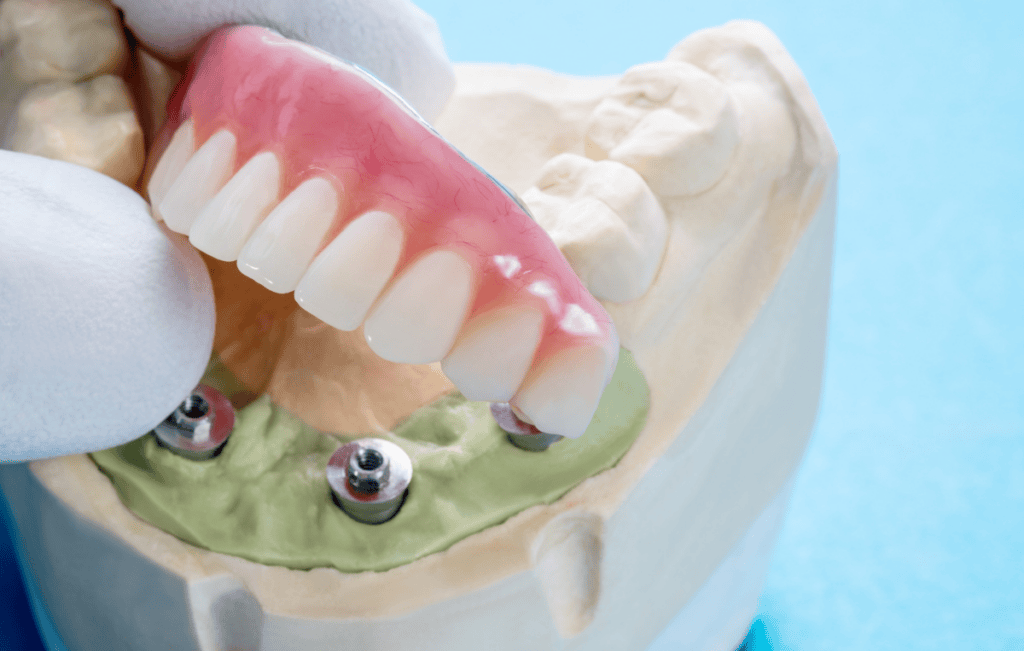
Several implants can support a full set of replacement teeth.
Implant-Supported Dentures
Implants can stabilize dentures for improved comfort and function.
Advantages of Dental Implants
Dental implants offer numerous benefits, including:
- Natural appearance
- Improved chewing ability
- Long-term durability
- Bone preservation
- Enhanced confidence
- Superior stability
Comparing Appearance
Many patients prioritize aesthetics when evaluating tooth replacement options.
Denture Appearance
Modern dentures have improved significantly and can look natural when properly designed.
However, dentures may occasionally shift during speech or eating, which can affect confidence.
Over time, bone loss can also alter the fit and appearance of dentures.
Implant Appearance
Dental implants are designed to closely mimic natural teeth.
Because implants emerge from the gums like natural teeth, they often provide a more realistic appearance.
Most people cannot distinguish a properly restored implant from a natural tooth.
Winner: Dental Implants
While both options can improve appearance, implants generally provide the most natural-looking results.
Comparing Comfort
Comfort is another major consideration for patients replacing missing teeth.
Denture Comfort
Dentures rest directly on the gums and may cause:
- Pressure points
- Sore spots
- Irritation
- Movement during chewing
Some patients adapt easily, while others experience ongoing discomfort.
Implant Comfort
Because implants become integrated into the jawbone, they function much like natural teeth.
Patients often report that implants feel more secure and comfortable than removable dentures.
Winner: Dental Implants
Most patients find implants more comfortable because they eliminate many common denture-related issues.
Comparing Stability and Function
Function is one of the most important factors when choosing a tooth replacement option.
Denture Stability
Traditional dentures rely on suction, adhesives, and gum support.
As the jawbone changes over time, dentures may become loose and require adjustments.
This can affect:
- Eating
- Speaking
- Confidence
Implant Stability
Dental implants are anchored directly into the jawbone.
This provides exceptional stability and allows patients to:
- Eat comfortably
- Speak clearly
- Smile confidently
Winner: Dental Implants
Implants offer superior stability and function compared to traditional dentures.
Comparing Bone Preservation
Many patients are unaware of the relationship between tooth loss and bone health.
Bone Loss After Tooth Loss
When a tooth is lost, the jawbone no longer receives stimulation from the tooth root.
As a result, the bone gradually shrinks.
Dentures Do Not Prevent Bone Loss
Although dentures replace the visible portion of missing teeth, they do not replace the roots.
Therefore, bone loss continues beneath the denture.
Implants Help Preserve Bone
Dental implants stimulate the jawbone similarly to natural tooth roots.
This helps maintain bone density and facial structure.
Winner: Dental Implants
Implants are the only tooth replacement option that helps preserve jawbone health.
Comparing Longevity
Patients often want to know which solution will last the longest.
Denture Lifespan
Dentures typically require:
- Adjustments
- Relines
- Repairs
- Replacement every several years
Changes in the jawbone can affect fit over time.
Implant Longevity
With proper care, dental implants can last for decades.
Many patients view implants as a long-term investment in their oral health.
Winner: Dental Implants
Implants generally offer greater longevity and durability.
Comparing Cost
Cost is often one of the biggest considerations when choosing treatment.
Initial Cost of Dentures
Traditional dentures typically have a lower upfront cost.
This makes them appealing to some patients seeking immediate tooth replacement.
Initial Cost of Implants
Dental implants generally require a greater initial investment due to:
- Surgical placement
- Advanced planning
- Customized restorations
Long-Term Value
While implants cost more initially, they often require fewer replacements and adjustments over time.
When evaluating long-term value, many patients find implants to be a worthwhile investment.
Winner: Depends on Priorities
Dentures may be more affordable initially, while implants often provide greater long-term value.
Implant-Supported Dentures: A Hybrid Solution
Some patients want the affordability of dentures combined with the stability of implants.
Implant-supported dentures offer an excellent middle ground.
Benefits of Implant-Supported Dentures
These restorations provide:
- Improved stability
- Better chewing ability
- Enhanced comfort
- Reduced movement
- Increased confidence
Popular Option for Full Arch Replacement
Many patients who currently wear traditional dentures upgrade to implant-supported solutions for improved quality of life.
Which Option Is Right for You?
The best tooth replacement solution depends on several factors.
These include:
Oral Health
Bone density and gum health influence treatment eligibility.
Lifestyle
Patients seeking maximum stability often prefer implants.
Budget
Financial considerations may affect treatment decisions.
Long-Term Goals
Patients looking for a permanent solution frequently choose implants.
A comprehensive evaluation is the best way to determine which option aligns with your needs.
Why Colorado Springs Patients Choose The Studio for Exceptional Dentistry
At The Studio for Exceptional Dentistry, every treatment recommendation is based on the patient’s unique goals, oral health, and lifestyle.
Dr. Andrew Hall and his team believe in educating patients about all available options so they can make confident decisions regarding their care.
Patients appreciate the practice’s commitment to:
Personalized Treatment Planning
Every smile is unique, and treatment plans are customized accordingly.
Advanced Technology
Modern diagnostic tools support accurate evaluations and predictable outcomes.
Transparent Communication
Patients receive clear explanations regarding benefits, limitations, and treatment expectations.
Exceptional Patient Experience
The team focuses on comfort, education, and long-term oral health success.
Conclusion
Both dental implants and dentures can restore missing teeth and improve quality of life. However, they differ significantly in terms of stability, comfort, bone preservation, longevity, and overall function.
For patients seeking the most natural-looking, durable, and long-lasting solution, dental implants often provide significant advantages. Traditional dentures remain a valuable option for many individuals, while implant-supported dentures offer an effective middle ground.
The best way to determine the right solution is through a personalized consultation with an experienced dental provider.
At The Studio for Exceptional Dentistry, patients receive individualized guidance and comprehensive evaluations to help them choose the treatment that best supports their oral health goals.
Frequently Asked Questions
Are dental implants better than dentures?
Dental implants generally offer greater stability, comfort, bone preservation, and longevity than traditional dentures.
Do dentures look natural?
Modern dentures can look very natural when properly designed and fitted.
Can I switch from dentures to dental implants?
Yes. Many patients transition from traditional dentures to implant-supported solutions.
How long do dental implants last?
With proper care, dental implants can last for decades.
Which option is more affordable?
Dentures typically have a lower upfront cost, while implants often provide greater long-term value.
Considering dental implants or dentures in Colorado Springs, CO? Contact The Studio for Exceptional Dentistry today to schedule a consultation and discover the tooth replacement solution that best fits your smile, lifestyle, and long-term goals.